What I did:
I read that one great feature of this app was that the things you did not manage to do by the due date would continue to appear in your calendar each day until you actually do them.
What happened:
Cannot find instructions on how to enable this feature. In addition to enabling this feature, where can I find a comprehenstive user guide (aside from what is under “Welcome” when first getting the app). Is that only available for paid users?
What I expected:
Expected that this feature was embedded as deafult, since it’s something mentioned front and center when reading about the app on the Apple App Store
Things that might be helpful to know (Agenda version, OS and model, etc):
Using the Apple version on lap top.
It’s difficult to answer your question, because I don’t know the exact context. Can you copy the text you saw on our web site? I can then give a good answer.
Agenda is not a calendar app, so it doesn’t really have the concept of a due event. What you can do is link a note to a calendar event. You can also set a date range for a note using the calendar control top-right on each note. You just drag across the dates you want, or use SHIFT-click on the Mac to select a range.
Ok, I get it. For some reason I thought it was possible for “Today” to list events in the past that are linked to a calendar event that had not been marked as complete yet. That is not possible, correct? I actually cannot find the text that I was referring to…perhaps I’ve mixed that up with a different app, apologies for the confusion.
Hi Alison,
Today doesn’t do that, but you can setup your own saved searches for date ranges, and you could set one up for any note with a date in the past month or week for example. That would work a bit like how you want it.
We have also got special support for #due tags. You can make a due tag with a date (#due(tomorrow)), and then setup a saved search called “Due” with search term “#due(today)”, and that one should keep notes around until you remove the tag, even after today.
We have also got special support for due tags. You can make a due tag with a date (due(tomorrow)), and then setup a saved search called “Due” with search term “due(today)”, and that one should keep notes around until you remove the tag, even after today.
I tried to create a Smart Overview with search term due(today) but it seems Relative Day search is not supported for tag in Agenda 20.2 iOS version. Am I missing something?
I just tried, and it converted “today” into today’s date, which makes sense to me. It wouldn’t make any sense to enter a due date in a note that was relative. As they say “Tomorrow never comes”.
A due date in a note must be a specific date. You can use terms like “today”, but they get converted at the moment of entry into specific dates.
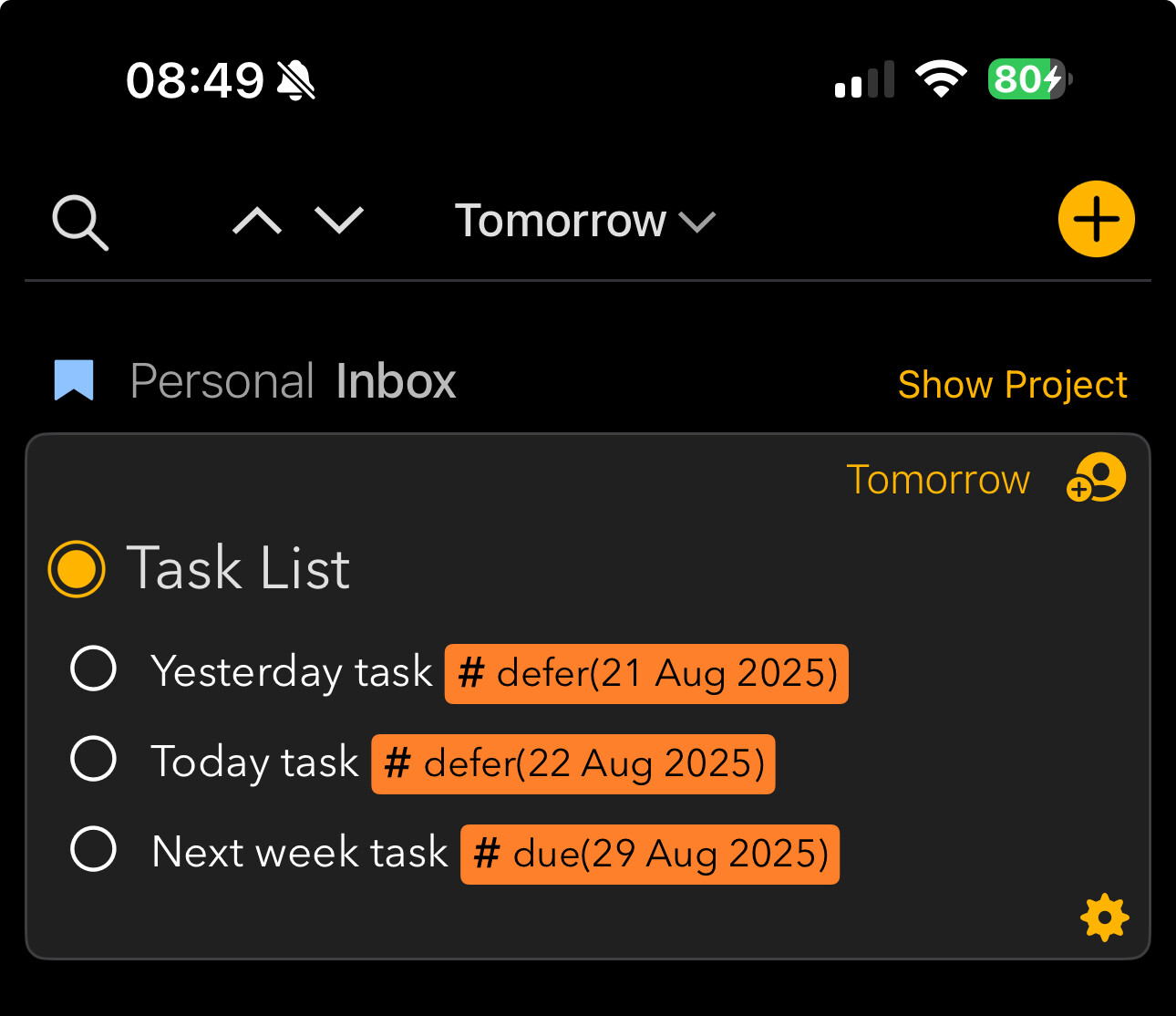
Let’s take this example to better explain the issue, I have a checklist.
All the task cannot be started before a specific day. They don’t have a particular due date.
They were marked with # defer() tag.
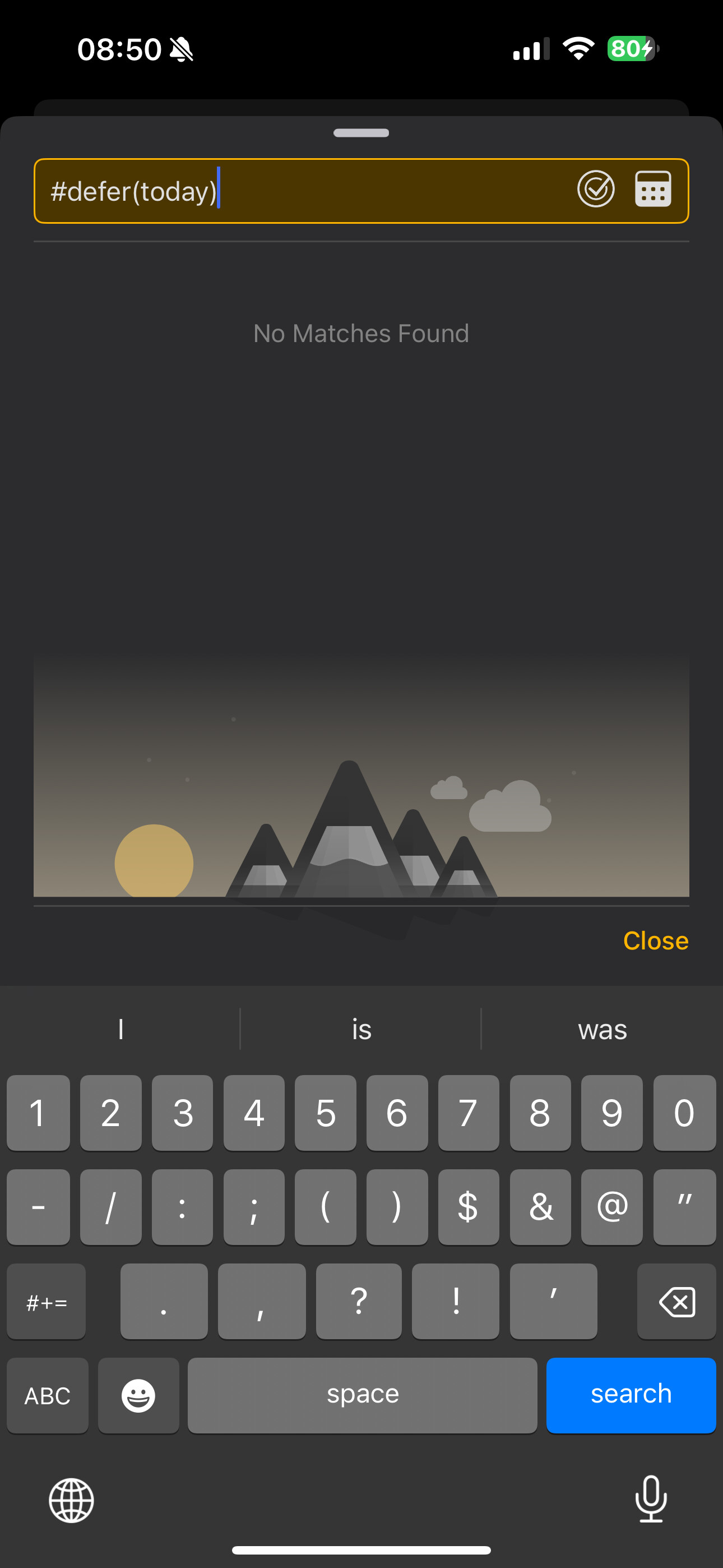
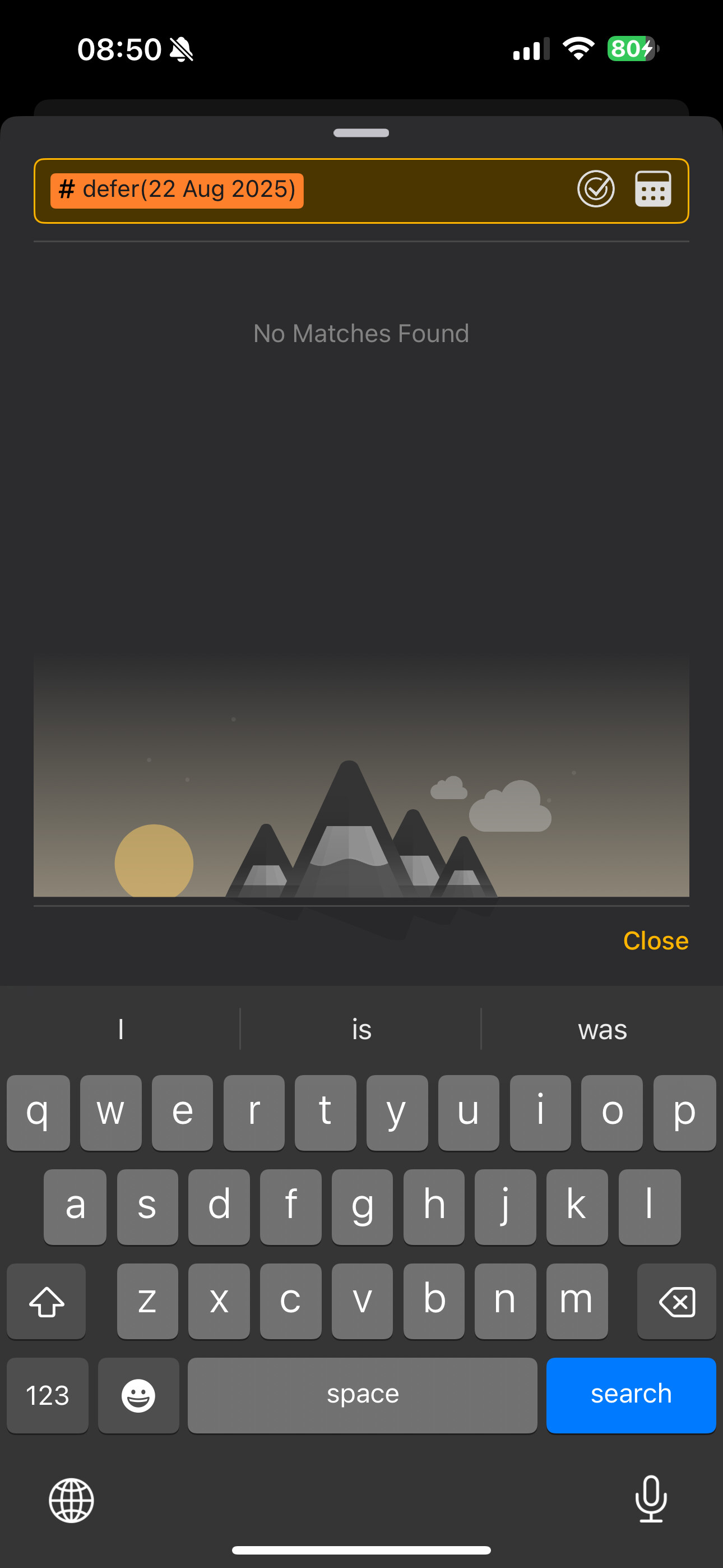
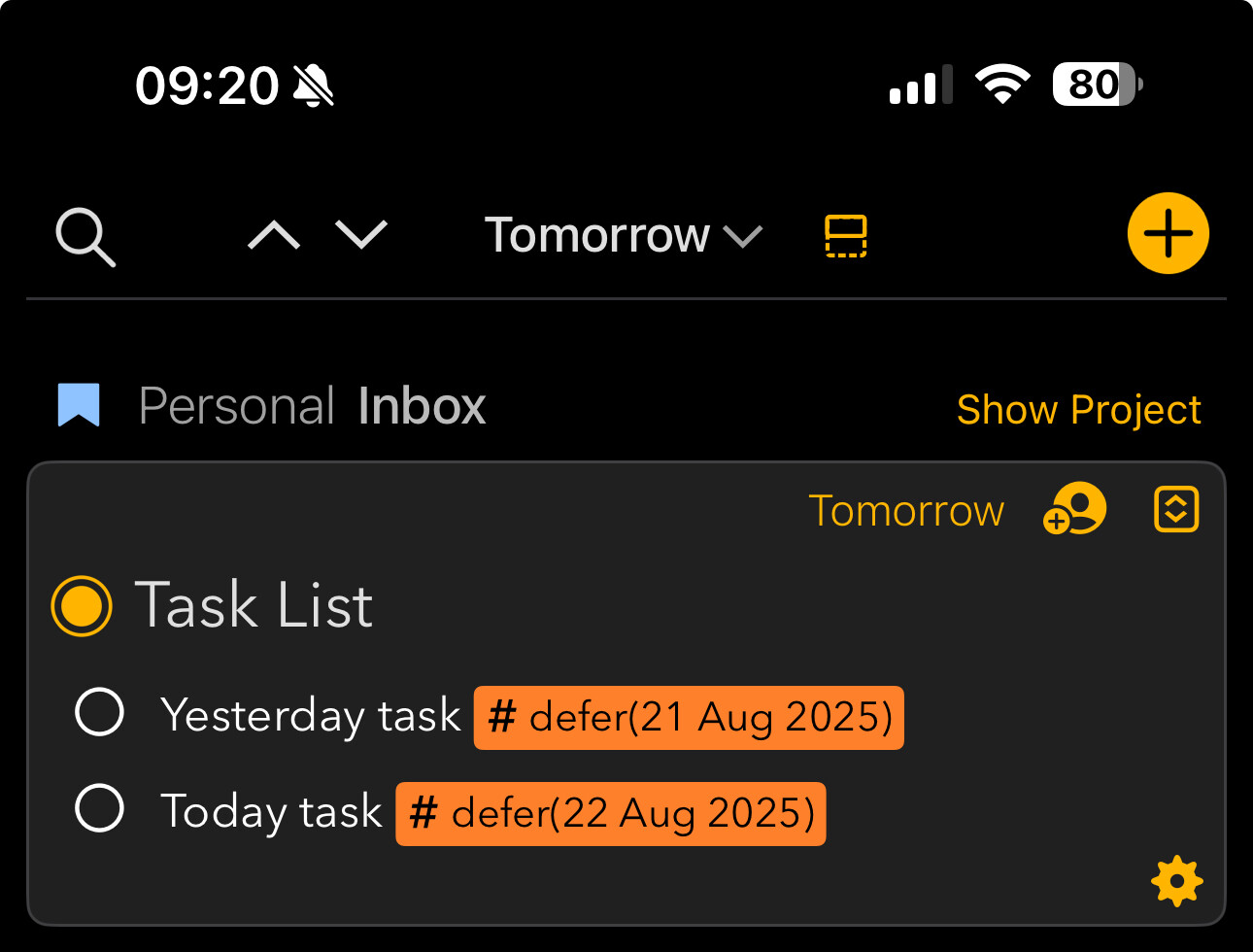
I wanted to setup a Smart Overview (Previously called Saved Search) with search term # defer(today) that keep as relative day. With text filter function to only display the task that I can do today. Therefore, I can use the same Smart Overview to focus on the task on later day.
On Agenda 20.1 iOS version. The tag parameter automatically turned to a fixed date # due(22 Aug 2025). I can’t find a way to keep the tag parameter as relative day.
I found that behaviour is different from your comment back in 2022
We have also got special support for due tags. You can make a due tag with a date (due(tomorrow)), and then setup a saved search called “Due” with search term “due(today)”, and that one should keep notes around until you remove the tag, even after today.
Ah, OK. Yes due tags are treated specially, I think, along with other date specific options. There should be an option when you create the smart overview to have either relative or specific dates.
It looks like that doesn’t work with a tag you define yourself, like “defer”. I need to investigate why that is like it is, whether it was deliberately like that, or is a bug.